CERAMICS EXHIBITION
CASTELLAMONTE
65th EDITION
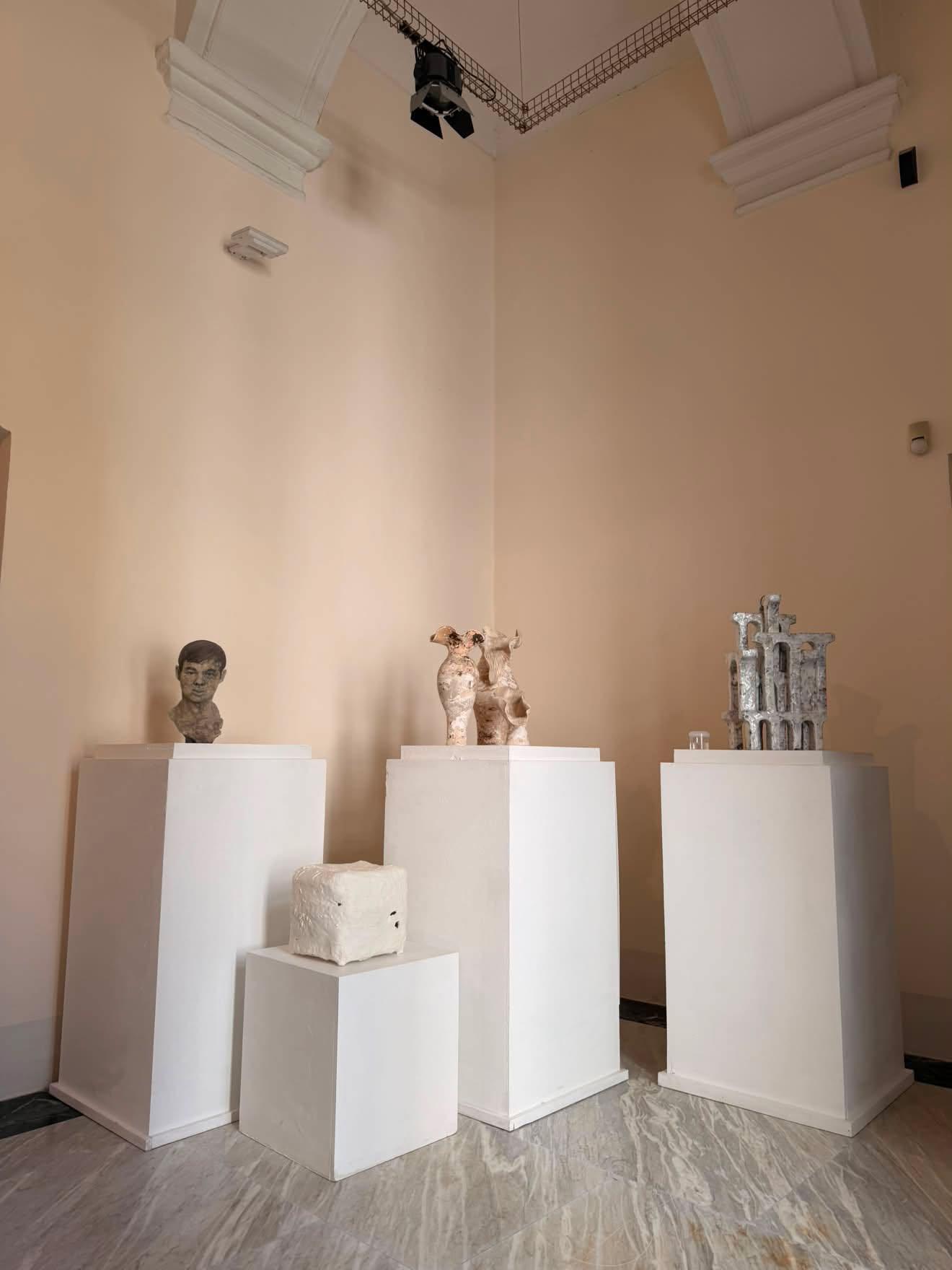
Maria Larsson
Naturecube, 2026
English
Educated in the UK’s ceramic arts, my journey began there and remains a central part of my life. Today, I live in Sweden and create figurative sculptures. My work around exploring the human condition, diving deeply into the multi-layered and complex states that define our shared existence.
En italiano
Cubo della natura, 2026
Formatasi nelle arti ceramiche del Regno Unito, il mio viaggio è iniziato lì e rimane una parte centrale della mia vita. Oggi vivo in Svezia e creo sculture figurative. Il mio lavoro ruota attorno all’esplorazione della condizione umana, immergendosi profondamente negli stati complessi e sfaccettati che definiscono la nostra esistenza condivisa.
Technique
The handbuilding technique is central to the sculptures that Maria Larsson makes. By forming and altering the clay with her hands and tools to build up a form, Maria uses flattened wide coils to build up forms quickly, then shapes the form with with a wooden spatula to strengthen the structure of the clay. Recently, Maria has also started to make white paper porcelain slip to dip organic materials that she forage from nature nearby, and she then combines these two techniques to create her more recent ceramic art. The clay she prefers is white porcelain because of the intricate and translucent properties of the clay. letting light play a key role in the identity of her pieces.
Tecnica
La tecnica del modellato a mano è centrale nelle sculture realizzate da Maria Larsson. Formando e modificando l’argilla con le mani e appositi strumenti per dare vita a una forma, Maria utilizza ampi colombini appiattiti per costruire rapidamente le strutture, che poi modella con una spatola di legno per rafforzare la consistenza dell’argilla. Recentemente, Maria ha iniziato anche a produrre barbottina di porcellana di carta bianca in cui immergere materiali organici raccolti nella natura circostante, combinando poi queste due tecniche per creare le sue opere d’arte ceramica più recenti. L’argilla che preferisce è la porcellana bianca per via delle sue proprietà intricate e traslucide, che permettono alla luce di svolgere un ruolo chiave nell’identità dei suoi pezzi.

